
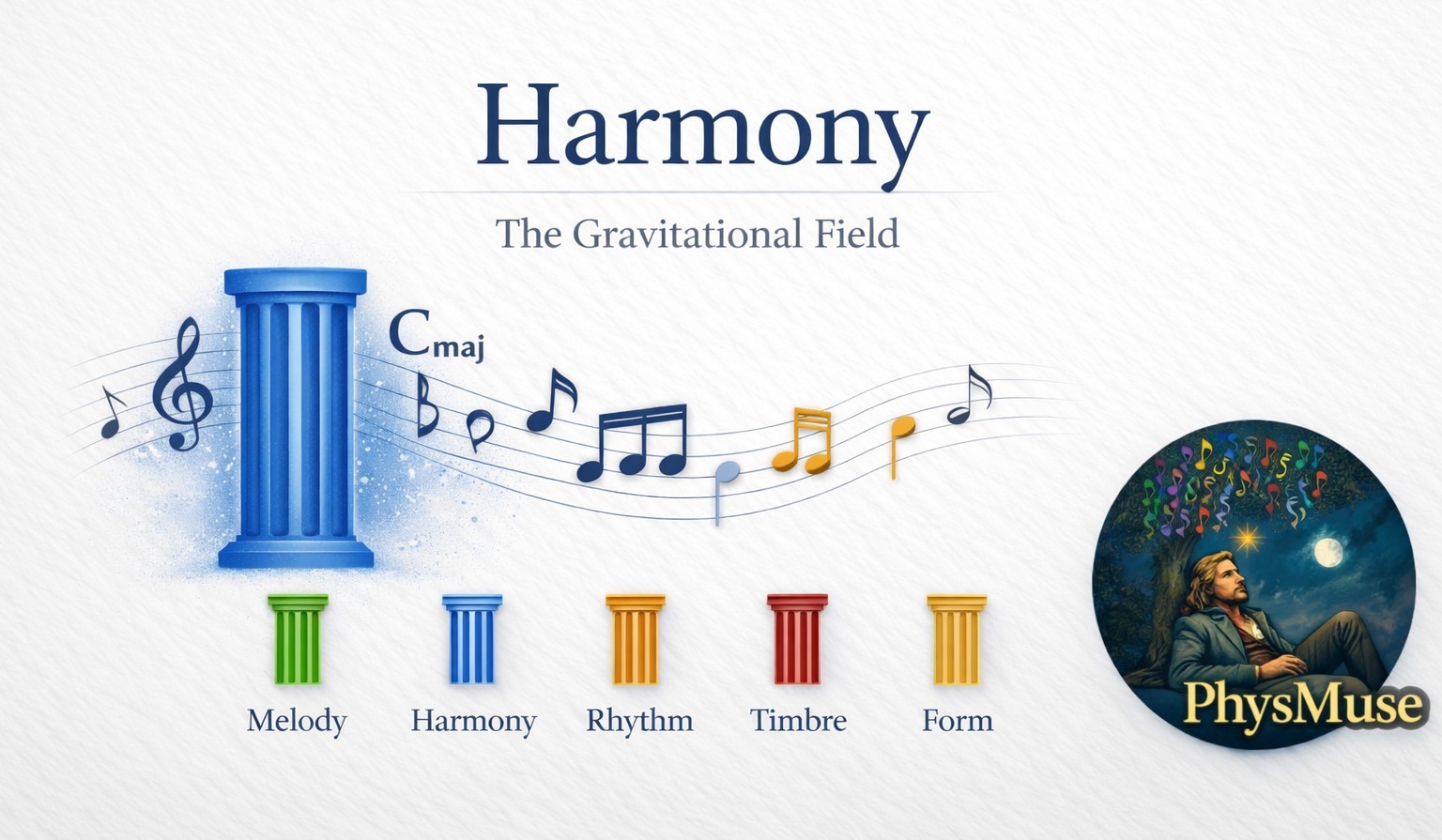
If melody is the line of meaning, harmony is the space it moves through. It’s the invisible field that gives notes their weight, direction, and emotional pull. Harmony defines how sound behaves — how it attracts, repels, and resolves.
Every chord carries a sense of gravity. Some pull toward rest, others create tension that demands release. This constant play between stability and movement is what makes harmony feel alive. It’s not just a backdrop for melody; it’s the environment that gives melody purpose.
Harmony works through relationships — intervals, chords, and progressions that create expectation. A single note means little until it’s heard against another. That contrast is where emotion begins. The simplest progression can evoke calm, longing, or surprise depending on how its gravitational field is shaped.
Strong harmony often shows three traits:
- Clarity of function — listeners can feel where the music wants to go
- Balance of tension and release — movement that feels earned, not mechanical
- Colour and contrast — subtle shifts that keep the ear engaged
Harmony is the architecture of emotion. It gives depth to melody and defines the listener’s sense of space. In the next post, we’ll explore Rhythm — The Engine of Motion, and how it transforms that space into momentum.
Leave a Reply