
-

The Minor Scales and Why there is more than one
This tutorial is a basic introduction to minor scales and will discuss briefly the natural minor scale and its construction.
-

The Pillars of Composition – Form: The Architecture of Ideas
Form is the architecture of musical thought — the structure that shapes ideas into coherent journeys. This post explores how proportion, repetition, and closure give music its sense of design.
-

The Pillars of Composition – Timbre: The Sound World
Timbre is the colour of sound — the quality that gives music its emotional character. This post explores how composers use tone, texture, and contrast to shape meaning within the five pillars of composition.
-

The Pillars of Composition – Rhythm: The Engine of Motion
Rhythm is the pulse that drives music forward. This post explores how pulse, pattern, and gesture create motion and energy within the five pillars of composition.
-
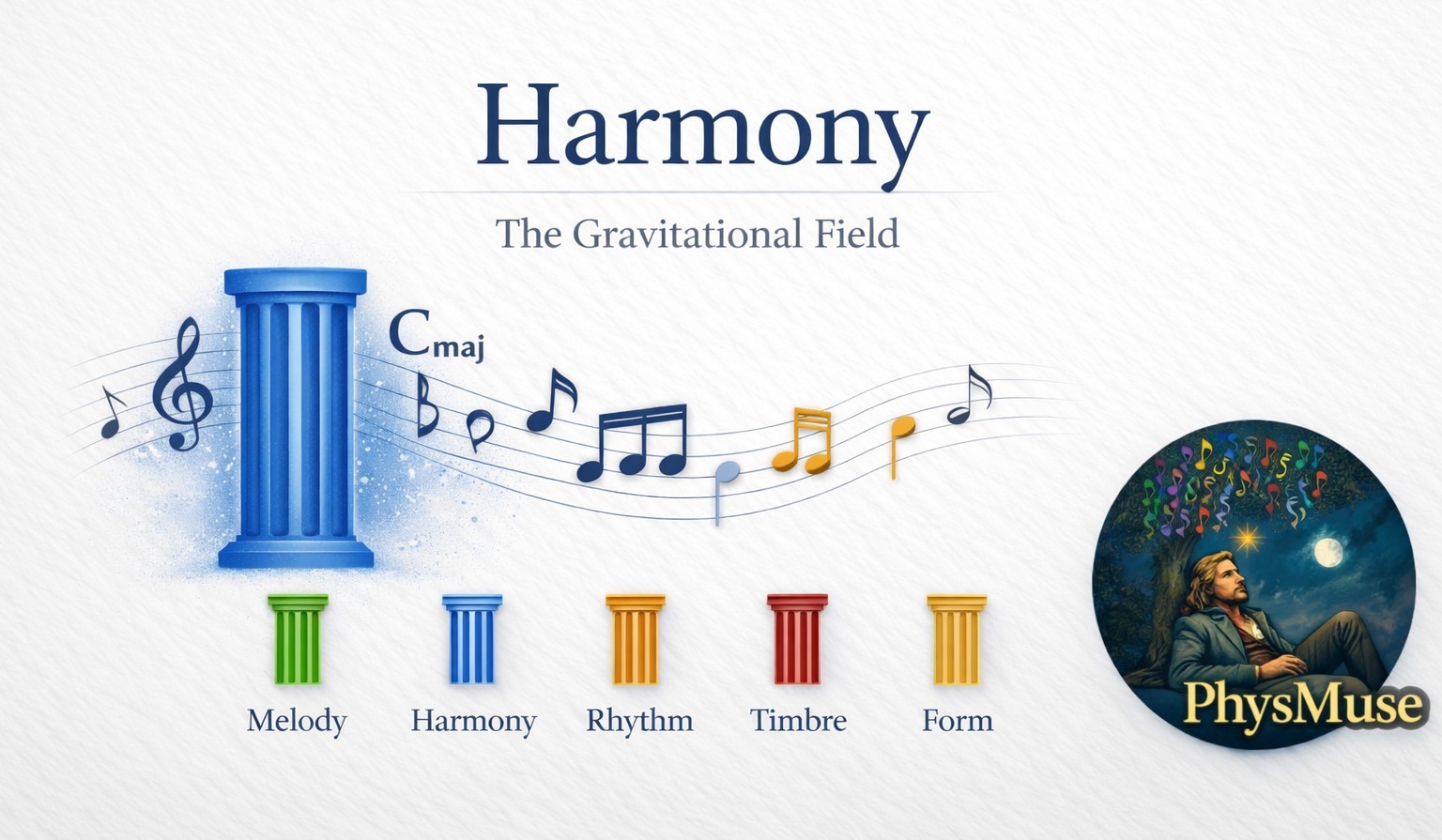
The Pillars of Composition – Harmony: The Gravitational Field
Harmony shapes the emotional space of music. This post explores how tension, release, and tonal gravity give depth and direction to melody within the five pillars of composition.
-

The Pillars of Composition – Melody: The Line of Meaning
Melody is the first pillar of composition — the line that gives music its voice. This post explores how contour, direction, and clarity transform notes into meaning.
-
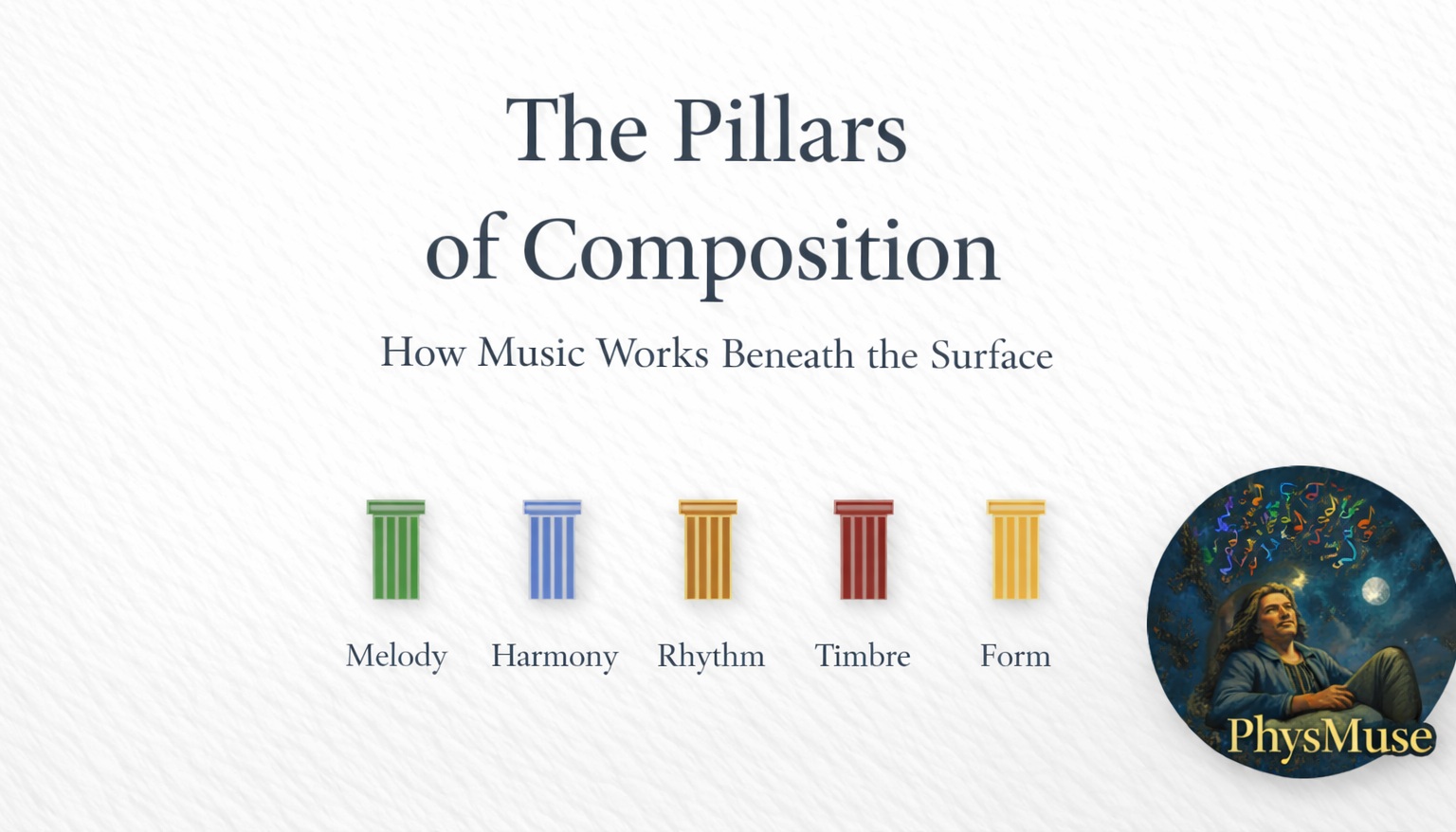
The Pillars of Composition — How Music Works Beneath the Surface
Every piece of music rests on five pillars: melody, harmony, rhythm, timbre, and form. This series introduces how these elements work together beneath the surface to shape musical expression.
-

Mapping the Landscape of Musical Texture — Understanding How Sound Is Organised
Explore the main types of musical texture — monophonic, homophonic, polyphonic, heterophonic, and harmonic — and discover how each shapes the way music breathes, moves, and carries emotion.
-
How Melodic Texture Brings Music to Life
Melodic texture reveals how musical lines breathe and interact — from the purity of a single melody to the conversation between intertwining voices. It’s the quiet craft that shapes expression and emotional depth in music.
-

How Rhythmic Texture Shapes the Motion of Music
Rhythmic texture defines how music moves — the interplay of patterns, accents, and silence that gives each piece its pulse. From sparse rhythms that breathe to dense layers that drive momentum, rhythmic texture transforms the listener’s sense of motion and energy.