
-

Music Theory for the Guitarist Available Again
Music Theory for the Guitarist is fully available again on Amazon after a brief listing interruption. Order the book now and continue your musical journey.
-

Suspense Mood – Orchestral Writing Exercise (Cubase Playthrough)
A suspense‑focused orchestral writing exercise created for the ThinkSpace Education course. A Cubase playthrough exploring mood, texture, and dramatic development.
-
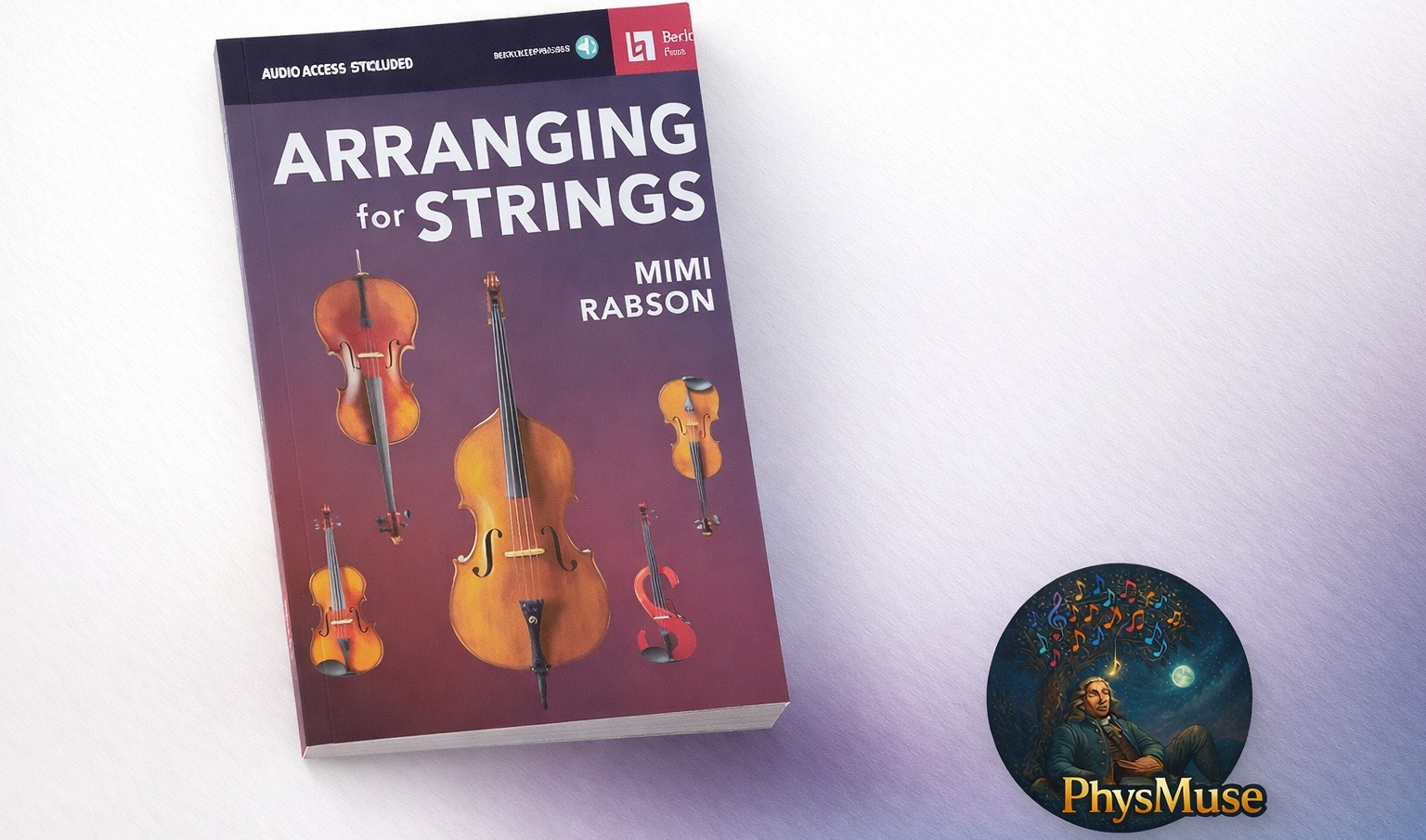
Arranging for Strings by Mimi Rabson (Berklee Press)
A clear, practical introduction to writing for violin, viola, cello, and bass. Learn ranges, bowing, articulation, and idiomatic techniques with audio examples.
-

Week One: Building Momentum
A short reflection on the first full week of May — keeping ArrangeMe publishing and Sync Licensing research moving in parallel. A steady, structured start to the month’s creative goals.
-

Uplifting Mood – Orchestral Writing Exercise (Cubase Playthrough)
An uplifting orchestral cue created as part of the Mastering Orchestral Composition with Spitfire Audio course by ThinkSpace Education. This Cubase playthrough explores melodic development, orchestral texture, and workflow clarity, continuing the PhysMuse educational series on orchestral mood writing.
-

The Pillars of Composition – Form: The Architecture of Ideas
Form is the architecture of musical thought — the structure that shapes ideas into coherent journeys. This post explores how proportion, repetition, and closure give music its sense of design.
-

The Pillars of Composition – Timbre: The Sound World
Timbre is the colour of sound — the quality that gives music its emotional character. This post explores how composers use tone, texture, and contrast to shape meaning within the five pillars of composition.
-

The Pillars of Composition – Rhythm: The Engine of Motion
Rhythm is the pulse that drives music forward. This post explores how pulse, pattern, and gesture create motion and energy within the five pillars of composition.
-
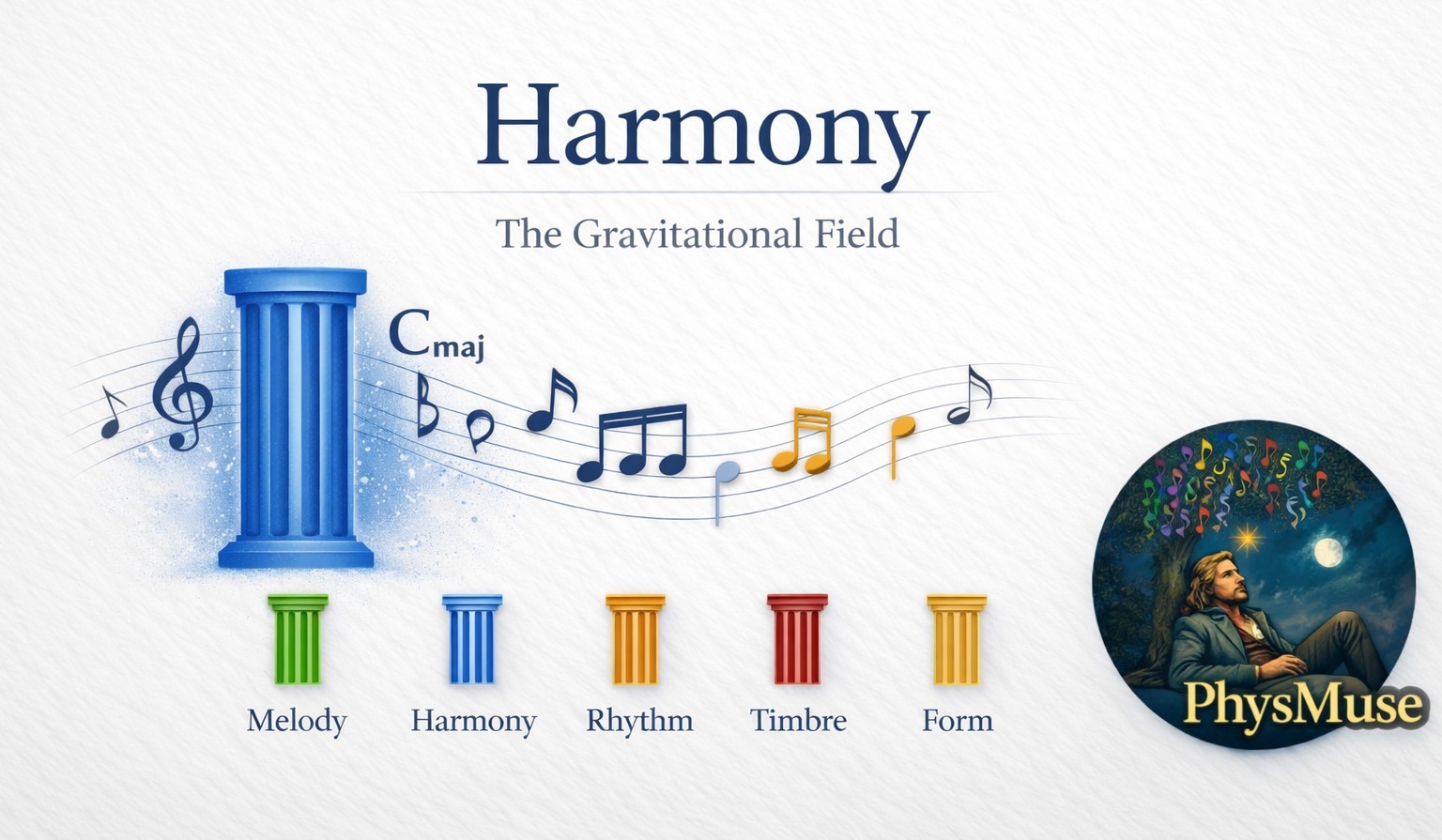
The Pillars of Composition – Harmony: The Gravitational Field
Harmony shapes the emotional space of music. This post explores how tension, release, and tonal gravity give depth and direction to melody within the five pillars of composition.
-

The Pillars of Composition – Melody: The Line of Meaning
Melody is the first pillar of composition — the line that gives music its voice. This post explores how contour, direction, and clarity transform notes into meaning.